Home / Print A Tree / Peatland in the Peak District
A Print A Tree Project · United Kingdom
Peatland restoration in the Peak District. Bringing back the blanket bog, one moss plug at a time.
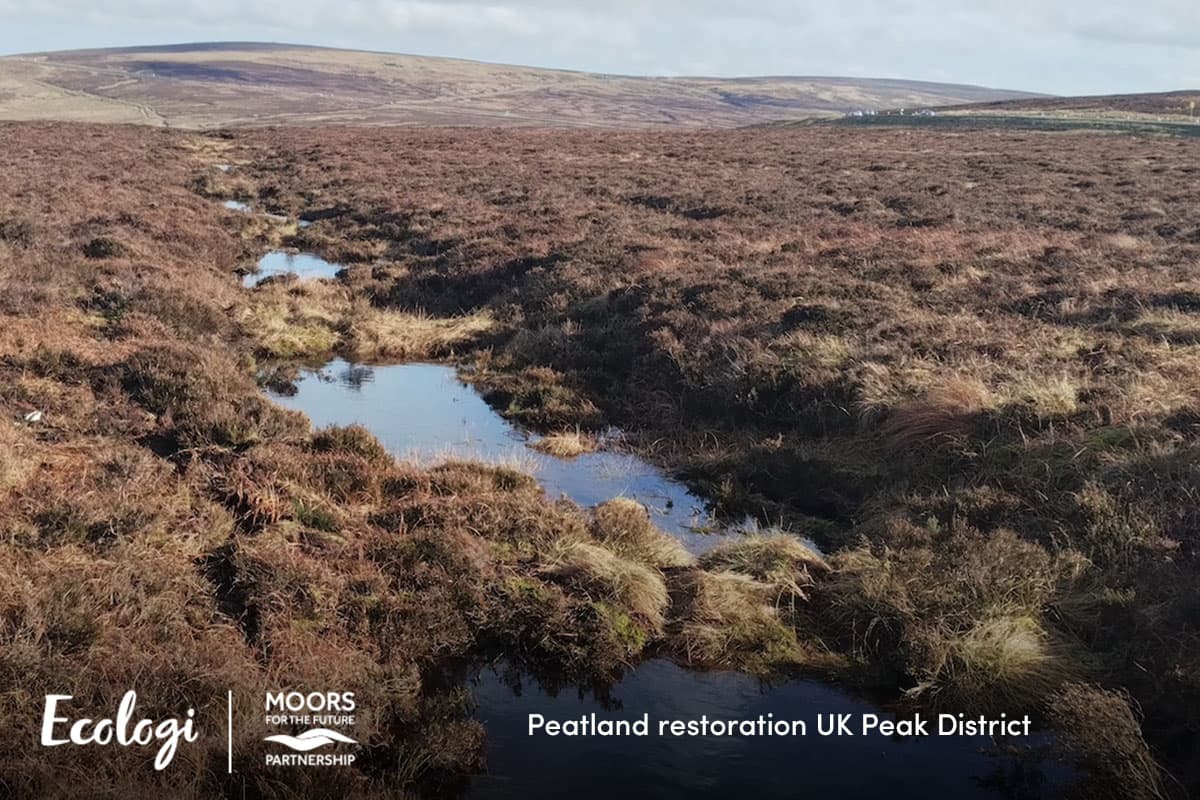
Moors for the Future Partnership is restoring the peat moorland of the Dark Peak and South Pennines by planting sphagnum moss. It is the closest Print A Tree project to home: the same county we print from.
- Funded by
- Printlogik orders
- UN global goals supported
- 5
- Dark Peak and South Pennines, England
- United Kingdom
In short
- Where: The moors of the Dark Peak and South Pennines, beside the M62 and the Woodhead Pass.
- What: Planting sphagnum moss plugs to bring damaged blanket bog back to health, and repairing the dams that keep the peat wet.
- Who: Moors for the Future Partnership, with local volunteers.
- Why: Healthy peat stores carbon. Damaged peat dries out, releases it, and burns.
Why the Peak District
Peatlands are wetlands, built up over thousands of years from plants that never fully rot. Ecologi’s page calls them the largest land-based carbon store on the planet, holding more than double the carbon in all the world’s forests. In the UK they cover around 12% of the land and hold about 5.5 billion tonnes of carbon, over half of what the country stores.
But only around 20% of the UK’s peatland is still in a near-natural state. Drainage for farming, commercial forestry, overgrazing, burning for game and livestock, peat cut for compost and fuel: each has taken its toll. Damaged peat stops storing carbon and starts giving it off.
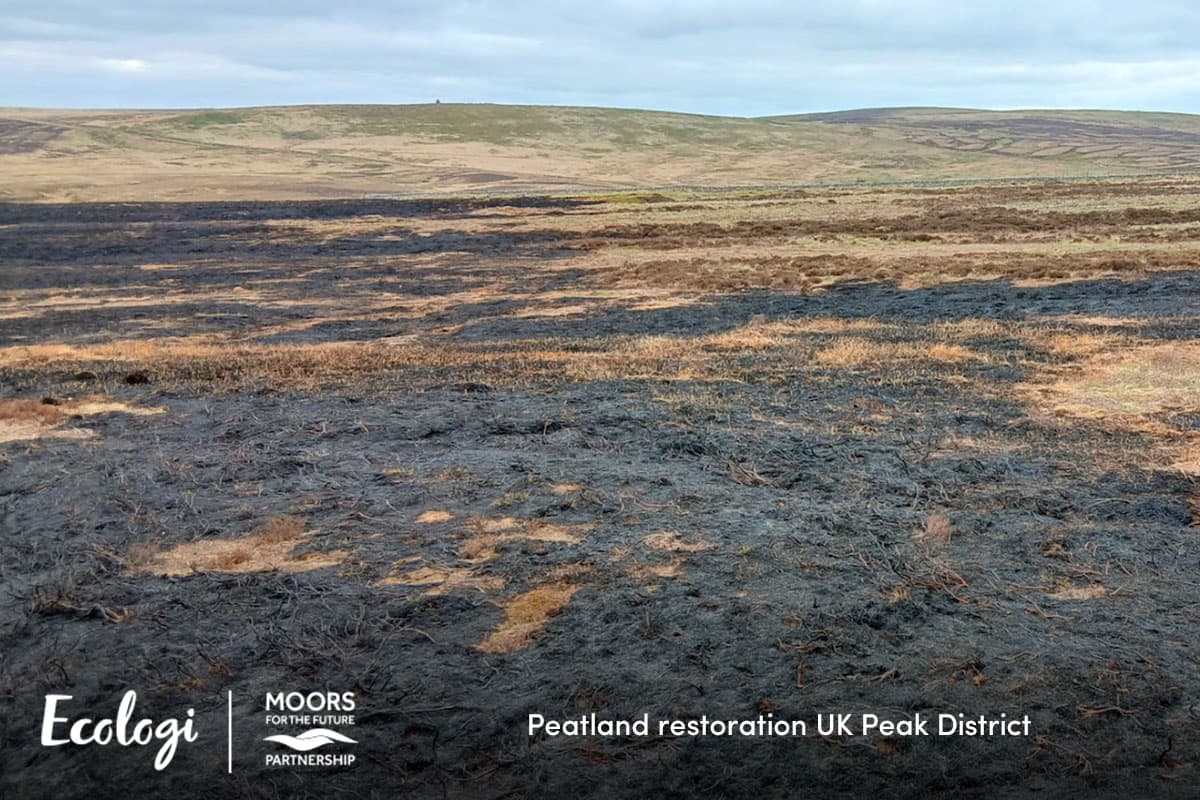
The moors of the Dark Peak and South Pennines were, in Ecologi’s words, the most degraded peatland in Europe, with miles of bare, eroding peat. Fire is a constant threat as well. Ecologi reports more than 30 moorland fires here since March 2025.
How the bog is brought back
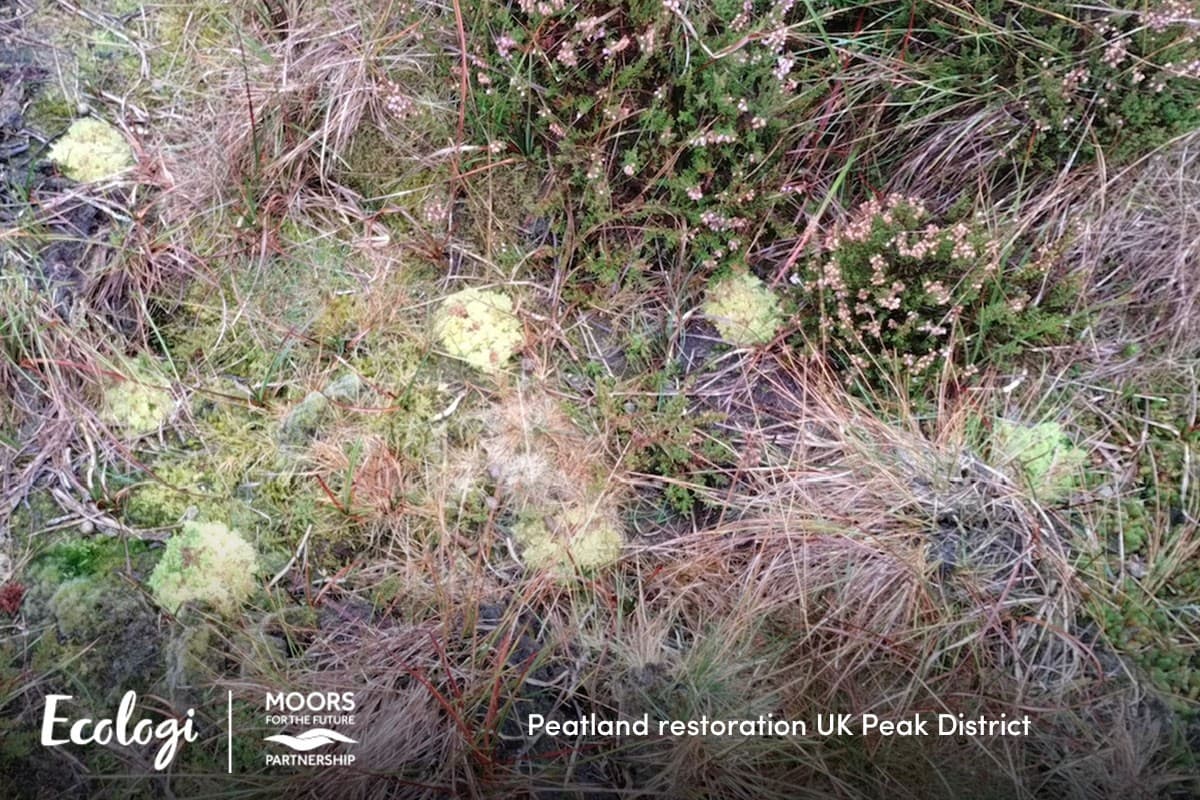
The work is on some 250 square kilometres of peatland beside the M62 and the Woodhead Pass. The key is sphagnum moss. It holds water like a sponge, keeps the peat wet, and over time becomes new peat itself. Where it has gone, the team plants it back by hand, as small plugs.
- It plants sphagnum. Moss plugs go into the damaged bog, so it can hold water and lay down peat again.
- It keeps the peat wet. Dams slow the water running off the moor. Some damaged in a wildfire in April 2025 have been replaced.
- It makes the moor harder to burn. Wet bog with a living moss cover resists fire far better than dry, bare peat.
Who does the work
Moors for the Future Partnership was founded in 2003 with a single Heritage Lottery Fund project. It has been protecting and re-wetting these uplands for over 20 years, and Ecologi says it has transformed over 35 square kilometres of degraded peat.
Local people take part too. Between January and March 2026, 127 volunteers across seven sessions planted 24,400 of the moss plugs, and learned why peatland matters while they did it.
Why it matters beyond carbon
These moors are where much of the north of England’s tap water begins. Ecologi’s page says the bog collects and releases water into reservoirs serving more than 19.5 million customers of three water companies. A healthy bog lets that water out slowly and cleanly, which means less treatment and less risk of flooding downstream.
Sphagnum also brings back the wider bog: the plants and animals that depend on it, and the healthier soil underneath.
The project on record
Ecologi lists this project as live and has funded it since 2025. The entries below come from the timeline on its page.
- April 2025A wildfire damages dams built in earlier restoration work in the Goyt.
- January to March 2026The winter season of restoration. 127 volunteers plant 24,400 sphagnum plugs across seven sessions, and damaged dams are replaced.
- July 2026The team surveys a large wildfire on the Snake Pass from May. Some research sites were badly damaged, but the sphagnum survived, still green and wet in the middle.
- October 202658,600 sphagnum plugs planted so far this year, and 23.44 hectares restored.
58,600sphagnum moss plugs planted on the moors in 2026, as reported by Ecologi in October 2026.
How the project is checked
We do not choose or run the projects ourselves. They are selected by Ecologi, which names Moors for the Future as the partner delivering this project and reporting on its progress.
This is a habitat restoration project, so it is measured in square metres of bog restored, not in carbon credits. Ecologi publishes the updates from the moor on the project’s page.
What Printlogik has funded here
Habitat restoration is the newest part of the Print A Tree Project. Since November 2026 the part of each contribution that goes beyond trees takes turns between carbon avoidance, permanent carbon removal and habitat restoration, so more kinds of project get support. The total cost to us stays exactly the same.
Ecologi’s public record names this project among those Printlogik’s contributions have gone to. Our total for habitat restored, in square metres, is shown live on the Print A Tree page.
How your order gets here
- You order printAny order, of any size. There is nothing to tick and nothing extra to pay.
- We make a contributionEach invoice triggers a contribution from Printlogik to Ecologi.
- Emissions are cutEcologi funds projects like this one, and records what we have funded in public.
The UN global goals it supports
The United Nations has set 17 Sustainable Development Goals for a fairer, healthier planet by 2030. Ecologi records this project as supporting 5 of them.
- 3Good health and well-being
- 6Clean water and sanitation
- 8Decent work and economic growth
- 13Climate action
- 15Life on land
Where it is
| Location | Dark Peak and South Pennines, England |
|---|---|
| Type of project | Habitat restoration |
| Run by | Moors for the Future Partnership |
| Status | Live. Ecologi has funded it since 2025 |
| Full record | See it on Ecologi |
Questions
Peatland in the Peak District, answered
Where is the project?
On the moors of the Dark Peak and South Pennines in northern England, beside the M62 and the Woodhead Pass.
What is blanket bog?
A kind of peatland that covers the tops of hills like a blanket. It is wet, spongy and built from sphagnum moss, and it stores a great deal of carbon.
Why plant moss rather than trees?
Sphagnum moss is what makes a bog a bog. It holds the water that keeps the peat wet, and over time it becomes new peat. Trees would dry the bog out.
Does this project plant trees?
No. It restores habitat, and is measured in square metres of bog restored.
Is the project still running?
Yes. Ecologi lists it as live, with updates as recent as October 2026.
How does my print order help?
Every Printlogik order plants trees and funds a climate project through Ecologi, at no extra cost to you. Some orders fund habitat restoration, which is where projects like this one are supported.
Can I check this?
Yes. Ecologi publishes the project and its updates. Our public profile can be reached from the Print A Tree page.
More from the Print A Tree Project
Other projects your orders fund
You order print. We fund climate projects.
Every Printlogik order adds to the Print A Tree Project, at no extra cost to you.