Home / Print A Tree / Cookstoves in Uganda
A Print A Tree Project · Uganda
Cookstoves in Uganda. Half the charcoal, made in Uganda.
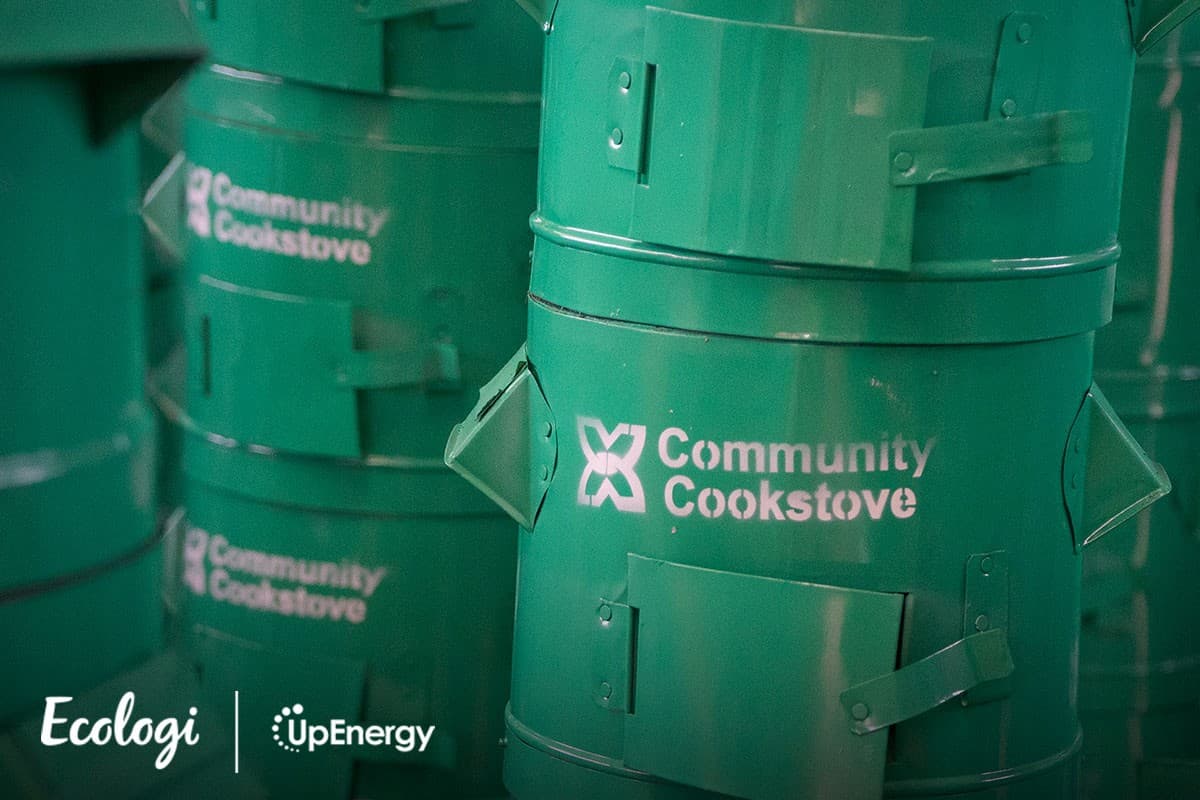
This project puts fuel-efficient charcoal stoves into homes across Uganda. They are made in Uganda by UpEnergy, and Ecologi says they cut the charcoal a household burns by 45% to 55%.
- Funded by
- Printlogik orders
- UN global goals supported
- 7
- Uganda
- 1.6°N, 32.3°E
In short
- Where: Households across Uganda. UpEnergy’s Ugandan office is in Kampala, and the stoves are made locally.
- What: Replacing smoky, wasteful ways of cooking with stoves that need far less charcoal.
- Who: UpEnergy, which runs the whole project, from designing and making the stoves to selling them and measuring the results.
- Why: Less charcoal burned means lower emissions, cleaner air at home, less pressure on forests and lower costs for families.
Why Uganda
Ecologi’s page quotes the World Bank: around 42% of Ugandans live on less than $2.15 a day. In rural areas, families cook over open fires or simple stoves, and the fuel has to be bought or gathered. That job falls mostly on women, who can spend hours a day collecting firewood.
The smoke is the other problem. Across sub-Saharan Africa, around 85% of people have no access to clean cooking, according to the same page. In Uganda, illnesses caused by smoke from cooking are the second most reported health problem after malaria, and women and young children are the most exposed. So a better stove is not only about the climate. It changes daily life at home.
How the project cuts emissions
A more efficient stove cooks the same meal with less fuel, so less carbon dioxide goes into the air. The stoves here are charcoal stoves built to waste less heat.
- It halves the charcoal. Ecologi says the stoves cut a household’s charcoal use by 45% to 55%.
- It eases pressure on forests. Cutting wood for fuel and charcoal wears forests down and can clear them altogether. Burning less of it means fewer trees taken.
- It cleans the air at home. Less fuel means less smoke indoors, which Ecologi links to better health for the people cooking and the children around them.
- It saves families money. Ecologi says 89.5% of users report saving money, as well as less smoke and less time spent cooking or collecting wood.
Who does the work
The project is run by UpEnergy, which is headquartered in Uganda and works with low-income communities across Africa. Ecologi says it handles every part of the project: designing and improving the stoves, making them, selling them, collecting the data and looking after the carbon credits.
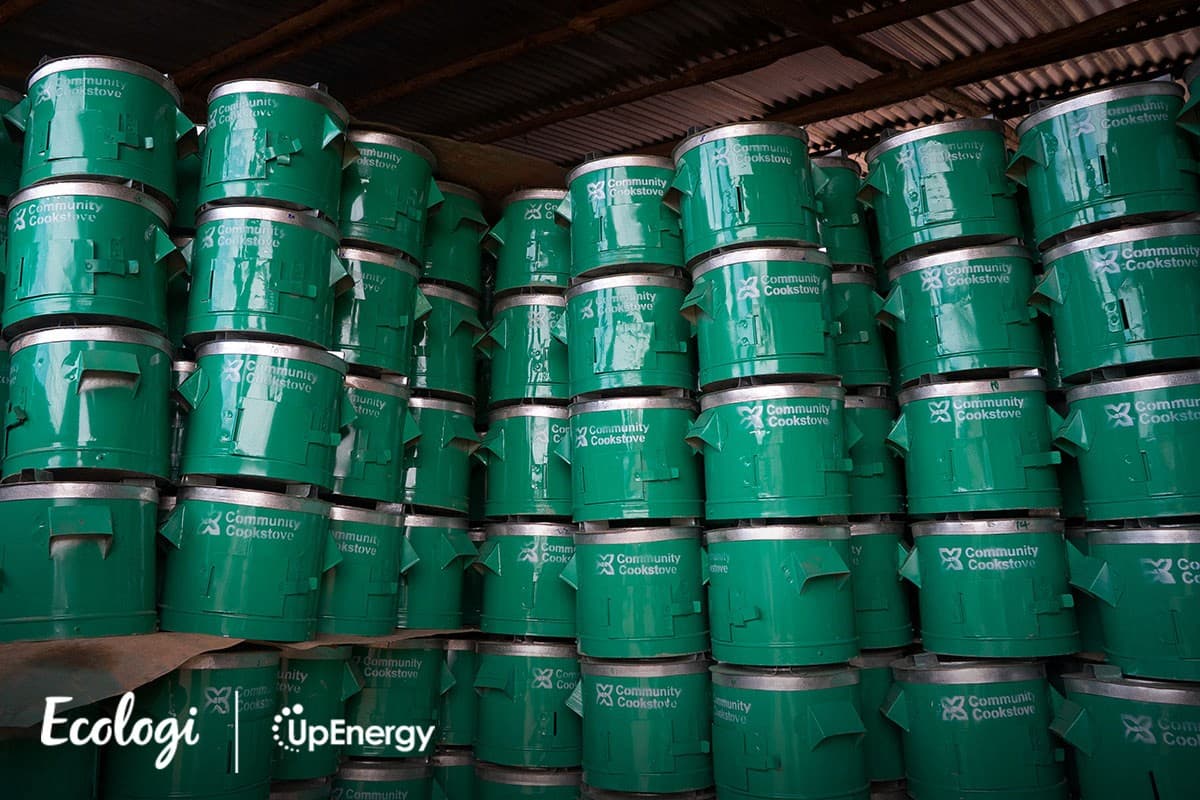
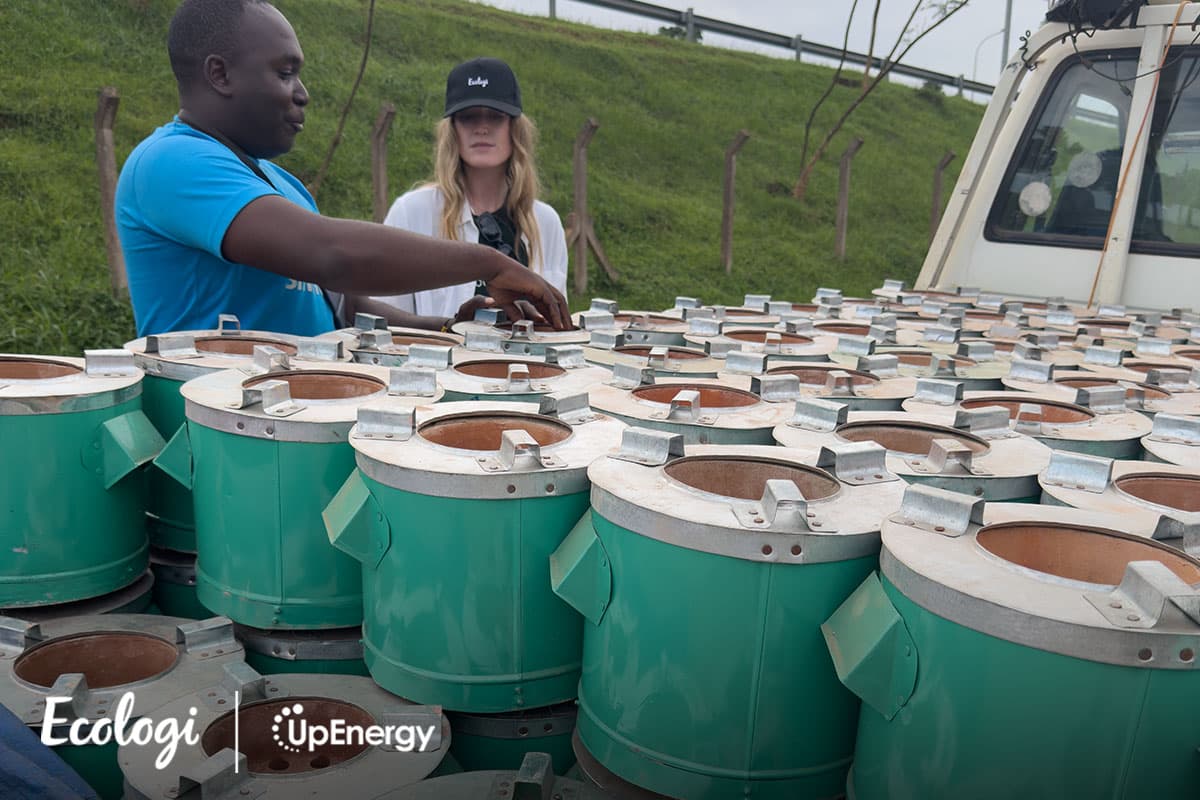
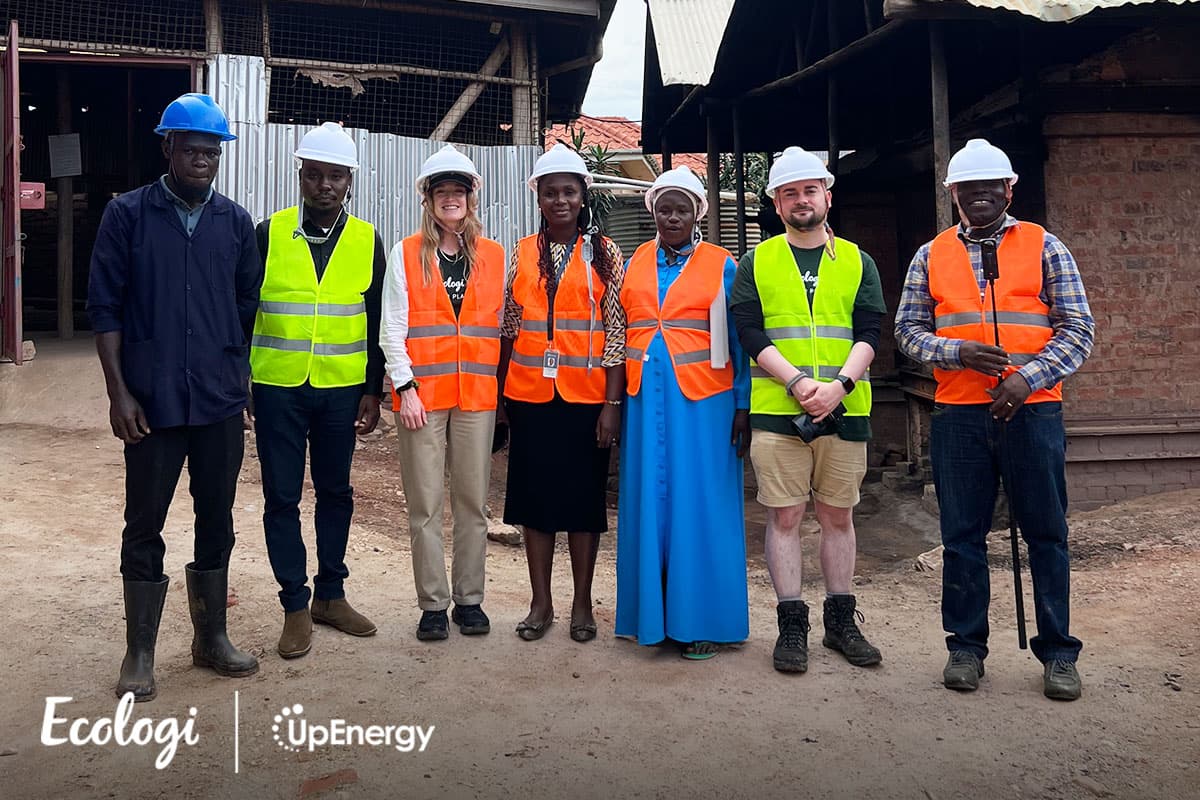
The stoves are made entirely in-house, from moulding the clay and metal bases to painting and final assembly, and the sales teams and distribution centres are local too. Ecologi says the project has created around 68 local jobs so far. Its staff visited UpEnergy’s office in Kampala in May 2025 and toured a newly expanded production site, paid for with carbon finance.
Some of the money from the carbon credits goes into UpEnergy’s Climate Resilience Impact Fund. Ecologi says this funds programmes for women and girls, including Street Child Uganda and Advancing Girls’ Education in Africa.
The project on record
Ecologi lists this project as live. The entries below come from the timeline on its page. Each figure covers one monitoring period only, so none of them is a running total. Ecologi dates some entries earlier than the period they describe, so we give the end date of each period as well.
Tonnages are given in CO2e, which means carbon dioxide equivalent.
- January 2021The project starts. Stoves begin going out to homes, under a programme set to run until the end of 2040.
- January 2021First monitoring period, which ended on 30 November 2021: 47,488 tonnes of CO2e avoided.
- September 2021A meeting with local people and organisations to hear their views on the project.
- November 2021The first survey of households: how much fuel they use, how often the stoves are used and what families save.
- December 2021The Gold Standard certifies the project’s design.
- December 2021Second monitoring period, which ended on 31 December 2022: 612,951 tonnes of CO2e avoided.
- January 2023Third monitoring period, which ended on 31 December 2023: 616,492 tonnes of CO2e avoided.
- January 2024Fourth monitoring period, which ended on 31 December 2024: over 587,000 tonnes of CO2e avoided.
- May 2025Ecologi visits UpEnergy’s office in Kampala to assess the project.
- December 2025The design is certified for a second crediting period, with an estimated average of 192,328 tonnes of CO2e avoided a year. This is an estimate, not a counted result.
587,000+tonnes of CO2e avoided in the year to 31 December 2024. This is the most recent counted result on Ecologi’s page.
How the project is checked
We do not choose or run the projects ourselves. They are selected by Ecologi.
The project is also checked from outside. Ecologi says it is verified by the Gold Standard and links to its entry on the Gold Standard registry, where the evidence is published.
What Printlogik has funded here
Ecologi keeps a public record of the projects each of its members has helped to fund. That record names this project among those Printlogik’s contributions have gone to, through the Print A Tree Project. Ecologi does not publish a figure for us project by project, so we cannot tell you how much of the work here was paid for by our orders, and we will not guess. Our total across all the carbon projects we have supported is shown on the Print A Tree page.
The project is open for funding on Ecologi today, so it is one of the places our contributions can go as new orders come in.
How your order gets here
- You order printAny order, of any size. There is nothing to tick and nothing extra to pay.
- We make a contributionEach invoice triggers a contribution from Printlogik to Ecologi.
- Emissions are cutEcologi funds projects like this one, and records what we have funded in public.
The UN global goals it supports
The United Nations has set 17 Sustainable Development Goals for a fairer, healthier planet by 2030. Ecologi records this project as supporting 7 of them.
- 1No poverty
- 3Good health and well-being
- 7Affordable and clean energy
- 8Decent work and economic growth
- 12Responsible consumption and production
- 13Climate action
- 15Life on land
Where it is

Uganda · 1.6°N, 32.3°E
| Location | Uganda |
|---|---|
| Type of project | Fuel-efficient cookstoves |
| Run by | UpEnergy |
| Status | Live and open for funding on Ecologi |
| Full record | See it on Ecologi |
Questions
Cookstoves in Uganda, answered
Where is the project?
In Uganda. The stoves go to households around the country and are made in Uganda by UpEnergy.
What does the project do?
It puts fuel-efficient charcoal stoves into homes, replacing open fires and stoves that waste fuel.
How does a stove cut emissions?
It cooks the same meal with less fuel. Ecologi says the stoves cut a household’s charcoal use by 45% to 55%.
Does this project plant trees?
No. It is a carbon project. It cuts emissions by reducing the charcoal people burn, which also eases pressure on forests.
Is the project still running?
Yes. Ecologi lists it as live and open for funding, and the design was certified for a second crediting period in December 2025.
How does my print order help?
Every Printlogik order funds tree planting and carbon reduction through Ecologi, at no extra cost to you. Ecologi’s public record names this project among those our contributions have gone to. It does not publish a separate figure for us at each project.
Can I check this?
Yes. Ecologi publishes the project and links to its entry on the Gold Standard registry. Our public profile can be reached from the Print A Tree page.
More from the Print A Tree Project
Other projects your orders fund
You order print. We fund climate projects.
Every Printlogik order adds to the Print A Tree Project, at no extra cost to you.