Home / Print A Tree / Cookstoves in Kenya
A Print A Tree Project · Kenya
Cleaner cookstoves in Kenya. Stoves that burn less charcoal, built in Kenya.
This project puts fuel-saving cookstoves into homes across Kenya. The stoves are made in Kenya by a company called BURN, and they need less charcoal to cook the same meal.
- Funded by
- Printlogik orders
- UN global goals supported
- 9
- Kenya
- 1.0°S, 36.7°E
In short
- Where: Households across Kenya. The stoves are made at BURN’s factory, and its headquarters are in Nairobi.
- What: Replacing traditional, wasteful cookstoves with efficient ones that use less fuel.
- Who: BURN, a stove maker founded in 2010. Ecologi says it employs 2,500 people, half of them women.
- Why: Less fuel burned means lower emissions, less smoke indoors, less pressure on forests and lower costs for families.
Why Kenya
Many homes in Kenya cook over charcoal or firewood. Ecologi’s page says 70% of households across the country use wood stoves, rising to 90% in rural areas. It also says more than 21,500 Kenyans die each year from cooking with these fuels. The smoke indoors is linked to pneumonia, stroke, heart disease and lung disease.
Burning so much wood and charcoal also drives the loss of forests and wears out the soil. And the fuel has to be fetched. That job falls mostly on women and girls, who can spend hours collecting wood. In some communities it keeps daughters out of school.
How the project cuts emissions
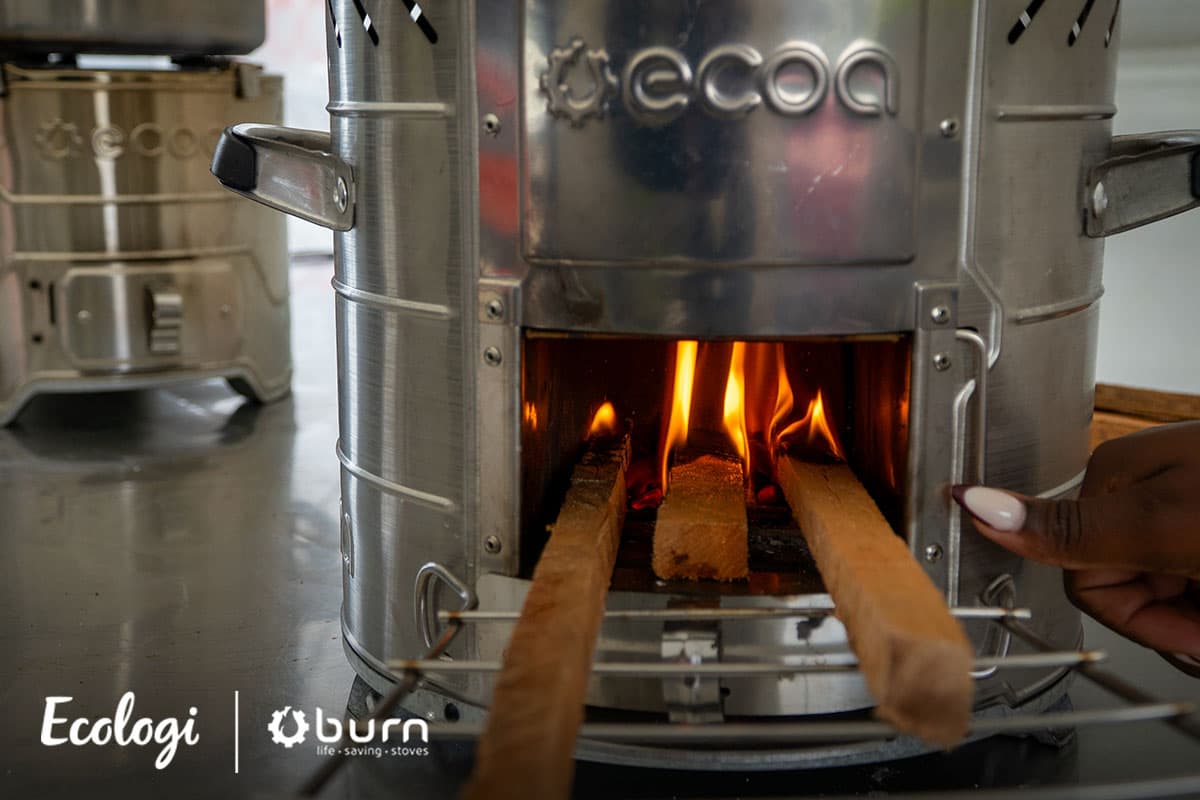
The idea is simple. A better stove cooks the same food with less fuel, so less carbon dioxide goes into the air. The stove distributed here is called the Jikokoa.
- It saves charcoal. Ecologi says each stove saves about 0.57 kilograms of charcoal a day, or about 204 kilograms a year.
- It eases pressure on forests. Making and using charcoal is a major cause of forest loss in Kenya. Using less of it means fewer trees cut down.
- It cleans the air at home. Ecologi says the stoves cut indoor air pollution by 65%.
- It saves families money. At an average price of 50 shillings a kilogram, Ecologi works out that a family can save up to 10,220 shillings a year.
Who does the work
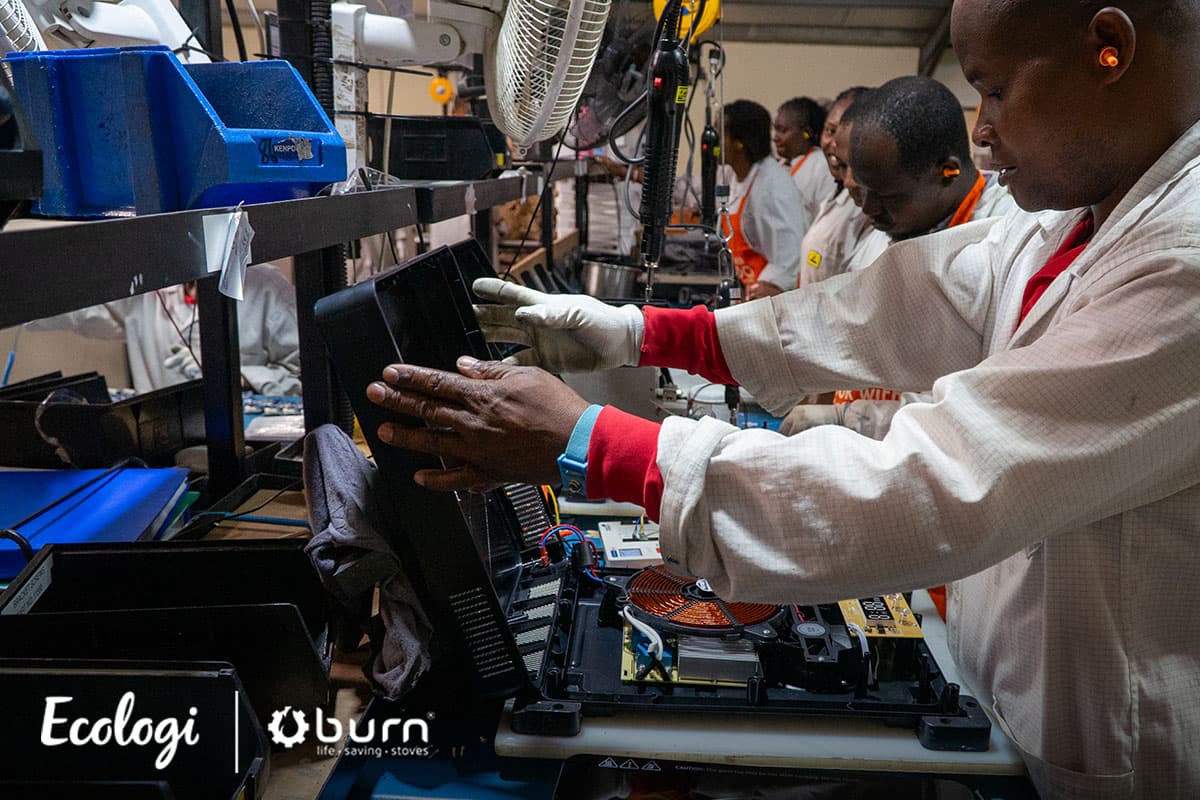
The project is run by BURN, a company founded in 2010. Ecologi describes its factory as Kenya’s first modern cookstove factory. It runs on solar power, can make up to 400,000 stoves a month and employs 2,500 people, half of them women.
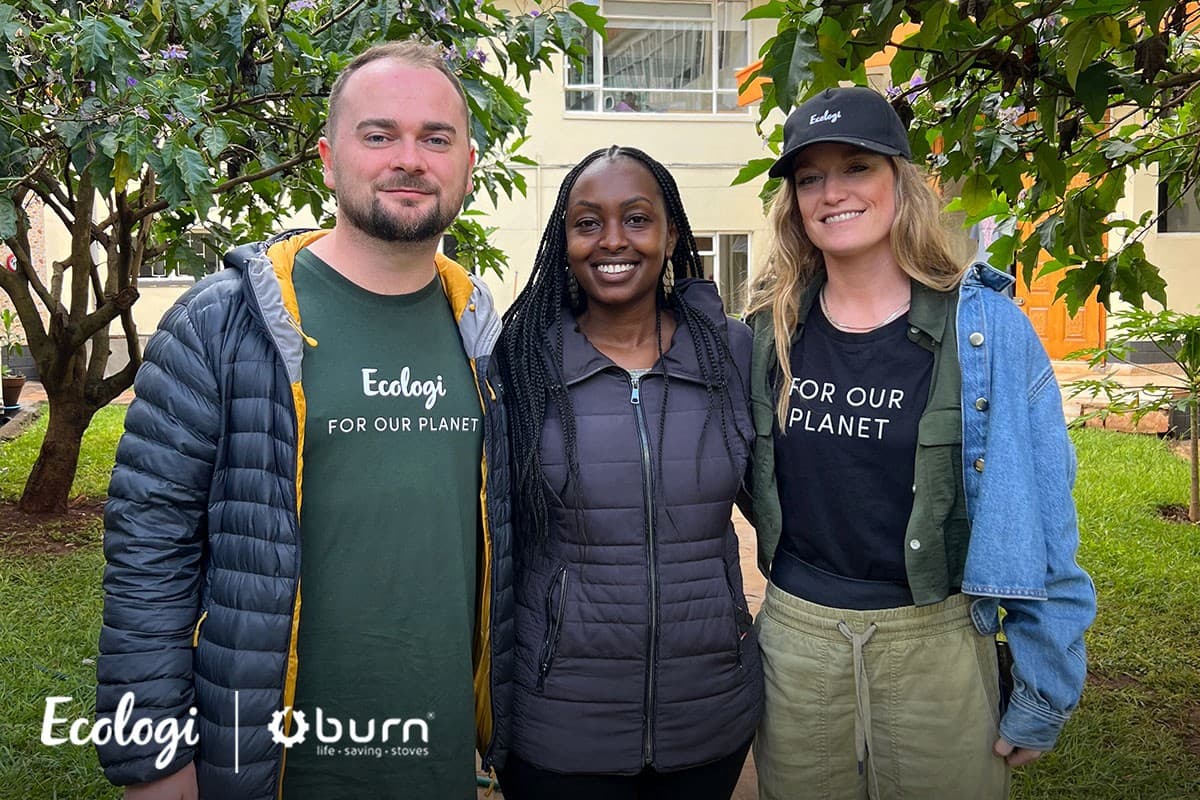
Because the stoves are built and sold in Kenya, the work stays in Kenya too: making the stoves, moving them around the country and selling them. Staff from Ecologi visited BURN’s headquarters in Nairobi in 2025 and reported seeing women leading production lines and running heavy machinery.
The project on record
Ecologi lists this project as live. The entries below come from the timeline on its page. Each figure covers one monitoring period only, so none of them is a running total. Ecologi dates some entries earlier than the period they describe, so we give the end date of each period as well.
Tonnages are given in CO2e, which means carbon dioxide equivalent.
- June 2009The starting date Ecologi gives for the project.
- May 2016First monitoring period, which ended on 25 April 2017: 231,026 tonnes of CO2e avoided.
- April 2017Second monitoring period, which ended on 30 December 2018: 428,427 tonnes of CO2e avoided.
- October 2018Third monitoring period, which ended on 31 May 2019: 462,795 tonnes of CO2e avoided.
- April 2022Fourth monitoring period, which ended on 13 March 2023: 95.63% of households said the air indoors seemed better, 37 people took part in training and 26 people were employed.
- March 2023Fifth monitoring period, which ended on 12 March 2024: 99.05% of households said the air indoors seemed better, 77 people received skills training and there were 68 contract jobs.
- May 2025Gold Standard renews the project for a third seven-year crediting period, from 31 January 2025 to 25 April 2031.
- December 2025Ecologi reports on its visit to BURN’s Nairobi headquarters to assess the project.
- February 2026An updated project design document estimates an average of 549,159 tonnes of CO2e avoided a year. This is an estimate, not a counted result.
- March 2026The monitoring report for the first monitoring period of the third crediting period is finalised.
99.05%of households said the air indoors seemed better in the monitoring period that ended in March 2024. This is the most recent counted result on Ecologi’s page.
How the project is checked
We do not choose or run the projects ourselves. They are selected by Ecologi, and this one carries its “Carbon Project Ecologi Approved” mark.
It is also checked from outside. Ecologi says the project is verified by the Gold Standard and links to its entry on the Gold Standard registry, where it is project 1559. The page lists the Core Carbon Principles as well. Ecologi describes these as ten science-based principles for picking out high-quality carbon credits.
What Printlogik has funded here
Ecologi keeps a public record of the projects each of its members has helped to fund. That record names this project among those Printlogik’s contributions have gone to, through the Print A Tree Project. Ecologi does not publish a figure for us project by project, so we cannot tell you how much of the work here was paid for by our orders, and we will not guess. Our total across all the carbon projects we have supported is shown on the Print A Tree page.
Ecologi lists this project as live, but its page says it is not available for new funding at present. Every order we print still makes a contribution through Ecologi, and it goes to the projects Ecologi is funding today.
How your order gets here
- You order printAny order, of any size. There is nothing to tick and nothing extra to pay.
- We make a contributionEach invoice triggers a contribution from Printlogik to Ecologi.
- Emissions are cutEcologi funds projects like this one, and records what we have funded in public.
The UN global goals it supports
The United Nations has set 17 Sustainable Development Goals for a fairer, healthier planet by 2030. Ecologi records this project as supporting 9 of them.
- 1No poverty
- 2Zero hunger
- 3Good health and well-being
- 4Quality education
- 5Gender equality
- 7Affordable and clean energy
- 8Decent work and economic growth
- 11Sustainable cities and communities
- 13Climate action
Where it is

Kenya · 1.0°S, 36.7°E
| Location | Kenya |
|---|---|
| Type of project | Cleaner cookstoves |
| Run by | BURN |
| Status | Live, but not open for new funding on Ecologi at present |
| Full record | See it on Ecologi |
Questions
Cookstoves in Kenya, answered
Where is the project?
In Kenya. The stoves go to households around the country and are made in Kenya by BURN.
What does the project do?
It distributes fuel-efficient cookstoves to replace traditional stoves that waste charcoal and wood.
How does a stove cut emissions?
It cooks the same meal with less fuel. Ecologi says each stove saves about 204 kilograms of charcoal a year.
Does this project plant trees?
No. It is a carbon project. It cuts emissions by reducing the fuel people burn, which also eases pressure on forests.
Is the project still running?
Yes. Ecologi lists it as live, and Gold Standard renewed it in May 2025 for a crediting period that runs to April 2031. Ecologi’s page says it is not open for new funding at present.
How does my print order help?
Every Printlogik order funds tree planting and carbon reduction through Ecologi, at no extra cost to you. Ecologi’s public record names this project among those our contributions have gone to. It does not publish a separate figure for us at each project.
Can I check this?
Yes. Ecologi publishes the project and links to its entry on the Gold Standard registry. Our public profile can be reached from the Print A Tree page.
More from the Print A Tree Project
Other projects your orders fund
You order print. We fund climate projects.
Every Printlogik order adds to the Print A Tree Project, at no extra cost to you.